

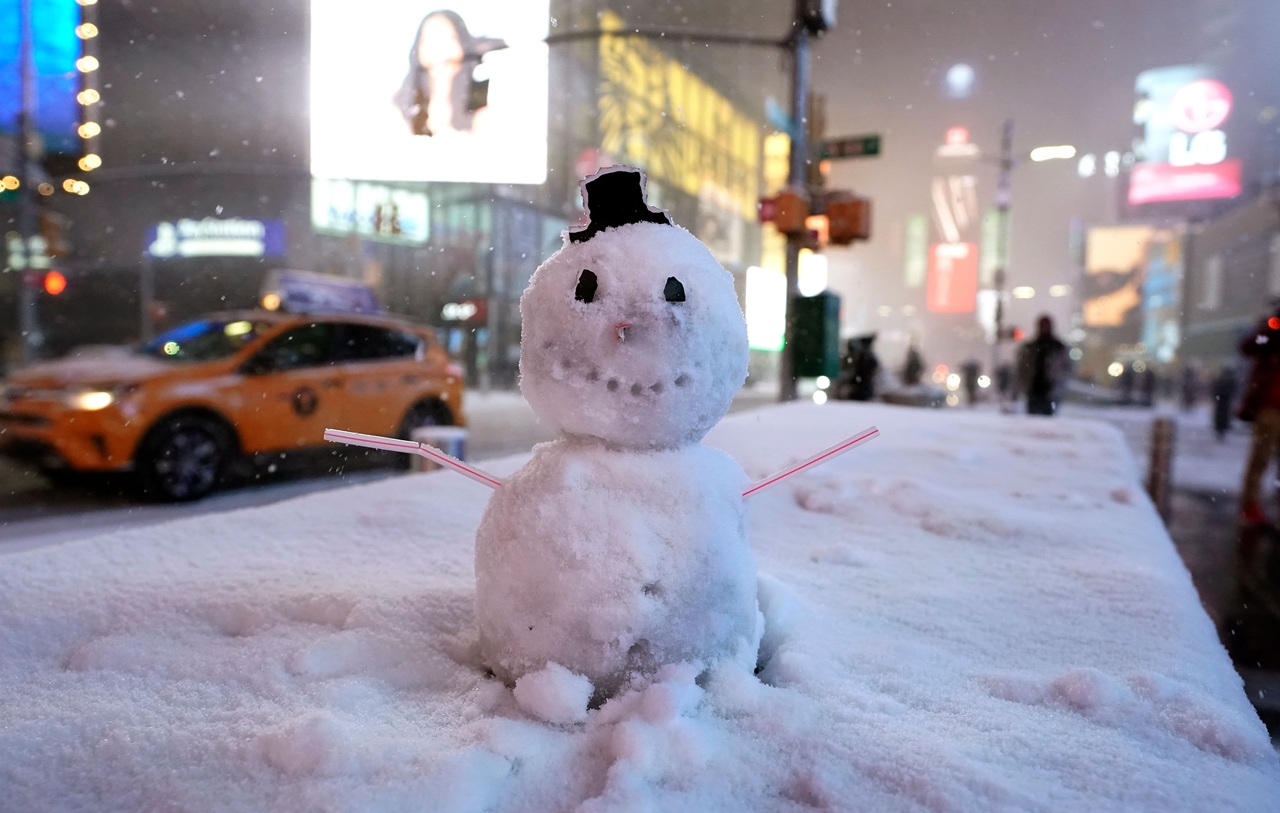
The northeastern United States was brought to a standstill Monday as what meteorologists described as the strongest snowstorm in a decade pummeled the region. From Maryland to Maine, heavy snowfall, fierce winds and blizzard warnings forced millions of residents to remain indoors. Schools and businesses closed, emergency declarations were issued and New York City experienced its first traditional snow day in six years.
Snowfall reaches record levels
The National Weather Service classified the system as a “classic bomb cyclone/nor’easter.” Such storms intensify rapidly when atmospheric pressure drops sharply within 24 hours, typically during winter as Arctic air collides with warmer coastal air masses.
Snow fell at rates of two to three inches per hour early Monday from New York through Massachusetts. Some communities accumulated more than a foot of snow since Sunday, with wind gusts exceeding 30 mph and near-zero visibility creating dangerous whiteout conditions.
Long Island MacArthur Airport reported 22.5 inches of snow. Parts of New York City recorded totals in the mid- to high-teens, including 16 inches in Coney Island. Freehold, New Jersey, measured 22 inches, while areas in Connecticut and Rhode Island saw up to 17 inches.
Travel bans and flight cancellations
Blizzard warnings stretched across multiple states, prompting authorities to impose non-essential travel bans. Cellphone alerts across New York City ordered residents to stay off the roads due to hazardous conditions. Similar restrictions were enacted in Rhode Island and New Jersey.
More than 5,000 flights were canceled nationwide, with the majority affecting airports in New York, New Jersey and Boston. Public transportation systems were suspended in several areas, and delivery services temporarily halted operations in parts of New York City.
Hundreds of thousands without power
The storm also caused widespread power outages along the East Coast. According to outage monitoring data, more than 400,000 customers were left without electricity early Monday, including approximately 146,000 in Massachusetts and 123,000 in New Jersey.
Although snowfall began to taper off in some locations, forecasters warned that another winter system later in the week could bring additional snow to the already battered region.