
Iran escalates Hormuz tensions: Hostile ships will be targeted
Iran’s Revolutionary Guard said it targeted a US oil tanker near the Strait of Hormuz and warned that vessels from the US, Israel and their allies will not be allowed to pass through the strategic waterway during the ongoing conflict.
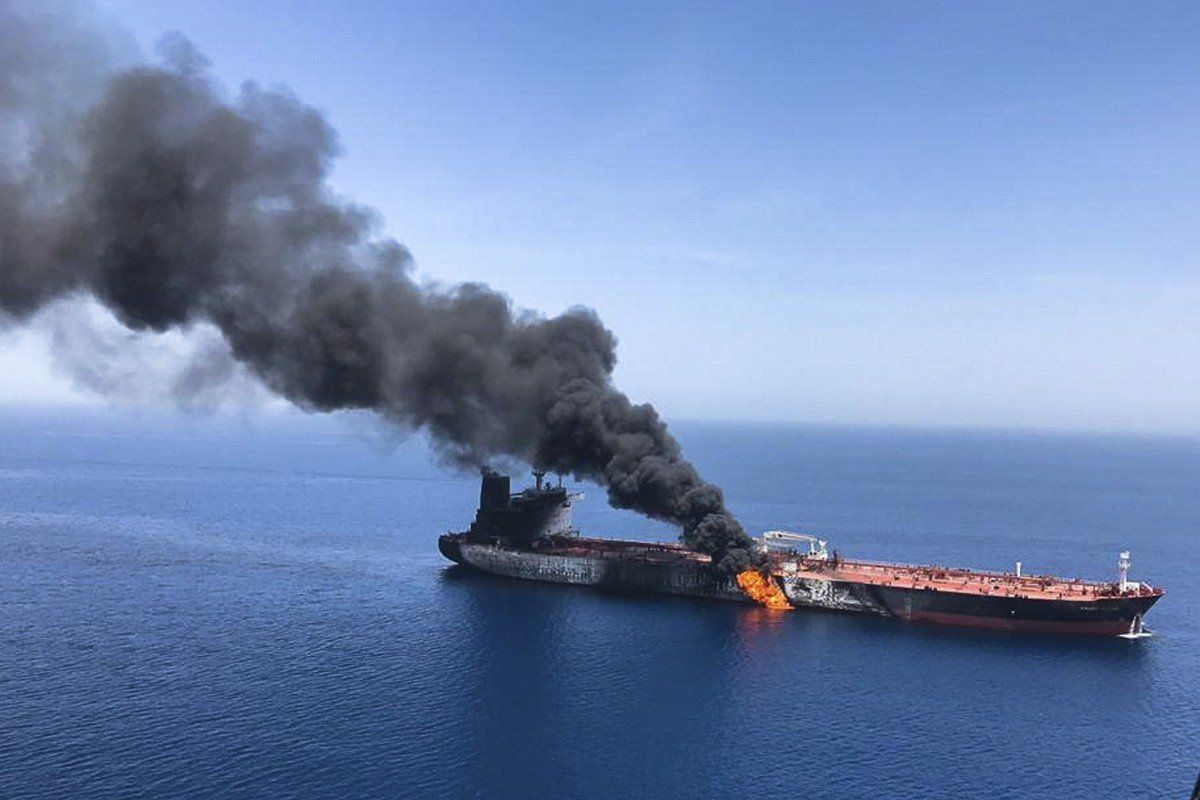
Tensions in the Strait of Hormuz intensified after Iran’s Islamic Revolutionary Guard Corps (IRGC) announced that it had targeted a US oil tanker in the northern Persian Gulf near the vital shipping route. Tehran also declared that the strait would be closed to vessels belonging to the United States, Israel and their allies while the conflict continues.
Missile strike on US tanker
In a statement, Iran’s Revolutionary Guard said a missile attack had been carried out against a US oil tanker in the northern part of the Persian Gulf.
Iranian officials warned that military or commercial vessels linked to the United States, Israel and their partners could become targets following the recent attacks against Iran.
Authorities also stated that ships belonging to the United States, Israel and countries supporting them would not be allowed to pass through the Strait of Hormuz.
“They will be targeted if detected,” the statement said.
Rising tensions in the Strait of Hormuz
The strike came shortly after Iran announced that it had taken control of navigation in the Strait of Hormuz and warned that vessels attempting to pass through the strategic route could face attacks under wartime conditions.
Iran had previously warned that ships ignoring its directives and attempting to cross the strait could be attacked.
The Revolutionary Guard also claimed that several oil tankers attempting to pass through the strait despite warnings had been targeted.
Strait closed to “hostile vessels”
Iran’s deputy foreign minister announced that the Strait of Hormuz would remain closed to all “hostile vessels” during the ongoing conflict.
The statement said ships belonging to the United States, Israel, European countries and their allies would not be permitted to cross the waterway and warned that violators could be targeted by drones and missiles.
World’s most vital oil chokepoint
The Strait of Hormuz, located between Iran and Oman, is considered one of the world’s most critical oil transit routes.
Around 20 percent of global oil and gas consumption passes through the narrow shipping corridor each day.
Following the escalation, shipping traffic through the strait has reportedly dropped sharply, with transit activity declining by about 80 percent compared to normal levels.
Energy markets shaken
Marine insurance companies have reportedly cancelled war-risk coverage for vessels operating in the area, leaving hundreds of tankers anchored in the Persian Gulf and the Gulf of Oman.
Oil prices have already risen by more than 10 percent, with analysts warning that a prolonged blockade could push prices well above $120 per barrel.
Regional tensions spreading
Iran has also launched retaliatory missile strikes against regional countries hosting US military bases, including Qatar, Kuwait, Bahrain and the United Arab Emirates.
Several Gulf states have reportedly condemned the attacks, accusing Tehran of carrying out “reckless and indiscriminate” strikes that could destabilize the region further.