

Trump announces truce, Israel draws the line: Two weeks for Iran, Lebanon left out
US President Donald Trump said Washington had agreed to suspend bombardment and attacks on Iran for two weeks following Pakistan-mediated talks. While the White House said Israel had accepted the deal, Benjamin Netanyahu’s office made clear that the ceasefire would not apply to Lebanon.
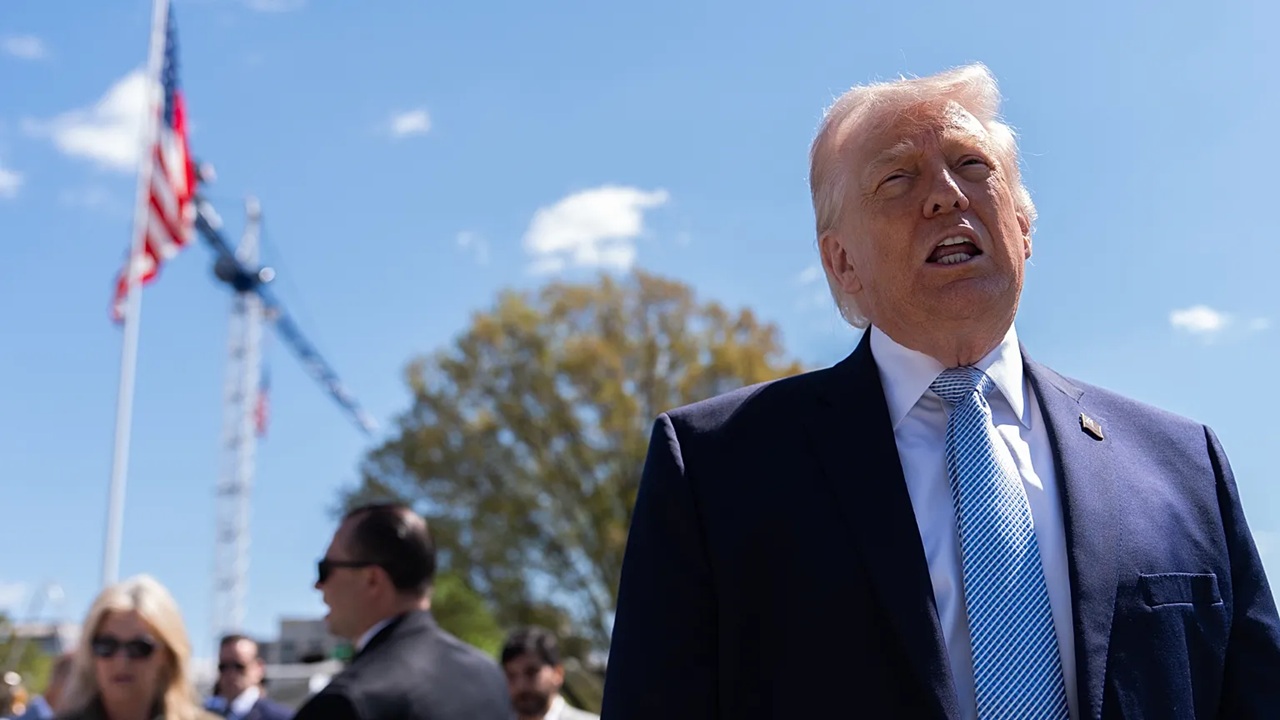
A series of back-to-back statements has thrown a new spotlight on the course of the war in the Middle East. Hours before the deadline he had set for Iran, US President Donald Trump announced that diplomatic contacts led by Pakistan had produced results and that the United States would pause its bombardment and attacks on Iran for a two-week period. Trump described the move as a bilateral ceasefire and said the opening could pave the way for a broader and longer-term agreement. The White House then said Israel had also accepted the arrangement. But that message was quickly followed by a striking clarification from Israeli Prime Minister Benjamin Netanyahu’s office, which said the two-week truce applied to Iran but not to Lebanon, raising fresh questions over how far the ceasefire actually extends.
Trump points to Pakistan’s mediation
In a post on Truth Social, Trump said talks carried out under the leadership of Pakistani Prime Minister Shehbaz Sharif and Pakistan’s army chief Asim Munir had delivered a positive outcome. He said he had accepted Pakistan’s proposal to halt possible attacks overnight and reopen the Strait of Hormuz.
“I agree to suspend the bombardment and attacks on Iran for a period of two weeks. This will be a bilateral ceasefire,” Trump said.
“We received a 10-point proposal from Iran”
Trump also argued that the United States had already achieved its military objectives inside Iran and said the two sides were moving closer to a long-term peace arrangement. He stated, “We received a 10-point proposal from Iran and believe this is a workable basis for negotiations.”
He added that nearly all past disputes between the United States and Iran had eventually ended in agreement and said the two-week period would allow time for a final deal to be completed.
Trump also said it would be an honor for him to help resolve what he called a long-standing problem on behalf of countries across the Middle East.
Trump calls it “a great day for world peace”
In a separate post, Trump described the latest development as a major moment for world peace. He said Iran wanted this outcome and had grown tired of the conflict. He also stated that the United States would help regulate traffic congestion in the Strait of Hormuz.
Claiming that the next phase could bring both political and economic gains, Trump said, “Big money will be made. Iran can begin rebuilding. We will load every kind of material and be there to make sure everything is going well. I am sure everything will go well. Just as we have seen in the United States, this could be the Golden Age of the Middle East.”
The White House says Israel accepted the deal
After Trump’s announcement, attention quickly turned to Israel’s position. A White House official told Anadolu Agency that Israel had also accepted the agreement. That statement immediately fueled expectations that a broader diplomatic opening might be taking shape.
Netanyahu’s office sends a different signal
But a statement from Israeli Prime Minister Benjamin Netanyahu’s office showed that the framework was narrower than it first appeared. Israel said it supported the US decision to suspend strikes on Iran for two weeks. Netanyahu added that Israel backed Donald Trump’s efforts to ensure that Iran no longer posed what he described as a nuclear, missile and terror threat to the United States, Israel, Iran’s Arab neighbors and the wider world.
He also said the United States had informed Israel that it remained committed to reaching those goals in talks due to take place in Islamabad on Friday.
The most striking line in the statement, however, was the one drawing a clear boundary around the truce. Netanyahu’s office said the two-week ceasefire did not include Lebanon.
Pakistan had spoken of a wider ceasefire
That position stood in contrast to the message delivered by Pakistani Prime Minister Shehbaz Sharif. Sharif had announced that the United States, Iran and their allies had agreed to an immediate ceasefire everywhere, including Lebanon and other areas. He said the decision was effective immediately.
Israel’s insistence that Lebanon remained outside the agreement has now raised new uncertainty over how the ceasefire will play out on the ground.
Tensions continue on the Lebanon front
Lebanon was pulled more deeply into the war on March 2 after Hezbollah, aligned with Tehran, launched attacks on Israel. Hezbollah said those attacks were in response to Israel’s killing of Iran’s Supreme Leader Ayatollah Ali Khamenei on the first day of the war, February 28, as well as Israel’s near-daily violations of the ceasefire agreed in Lebanon in November 2024.
That earlier truce had been reached after more than a year of cross-border fire between Israeli forces and Hezbollah following the launch of Israel’s war on Gaza in October 2023.
The toll in Lebanon keeps rising
According to Lebanese authorities, Israeli attacks on Lebanon since March 2 have killed more than 1,500 people and displaced more than 1 million others. The Israeli military has also launched an invasion of southern Lebanon and said it aims to seize more land for what it describes as a buffer zone.
The ceasefire announcement opens a new debate
Trump’s decision to present the two-week pause as a great day for world peace initially created the impression that the region might be entering a period of de-escalation. But Israel’s move to exclude Lebanon from the arrangement has immediately complicated that picture. Optimistic messaging from Washington and Islamabad now stands alongside a much narrower definition from Tel Aviv, leaving one central question hanging over the region: whether this ceasefire marks the beginning of a diplomatic breakthrough, or simply a pause on one front while fighting continues on another.