
Where is FIFA in this game?
Keny Arroyo has dropped out of Ecuador’s match-day frame. Elan Ricardo has fallen into a pattern of injury and indiscipline. Football still calls this development. It is time to ask harder questions.
Football has an extraordinary ability to aestheticise what it would rather not examine.
A young player is discovered, branded as “the future”, flown across borders and presented as proof of vision. The club speaks of opportunity. The market speaks of potential. The adults in the room speak the language of planning, investment and belief.
And then, very quickly, the story changes.
Keny Arroyo is not in Ecuador’s official squad for the match against the Netherlands. This is not simply a case of missing the starting line-up; he is absent from the official match squad. For a player once spoken of as part of Ecuador’s future, that is not a trivial detail. It is a warning sign.
The picture is troubling on Elan Ricardo’s side, too. Reliable player records show limited minutes in 2026, at least one red card, and a serious knee or lower-extremity issue that has disrupted his continuity. I cannot firmly verify the claim of two red cards, so I will not overstate it. One confirmed dismissal plus a significant injury is troubling enough.
On their own, these events do not prove a scandal. Football careers rise and stall. Young players lose rhythm. Injuries happen. Discipline can fray. But sometimes the issue is not the individual incidents. It is the pattern they create when placed side by side.
And the pattern here is difficult to ignore.
What football likes to call “adaptation” can often be something harsher: dislocation, overexposure, premature expectation, emotional isolation. A young player moved too fast, burdened too early, then left to absorb the consequences alone.
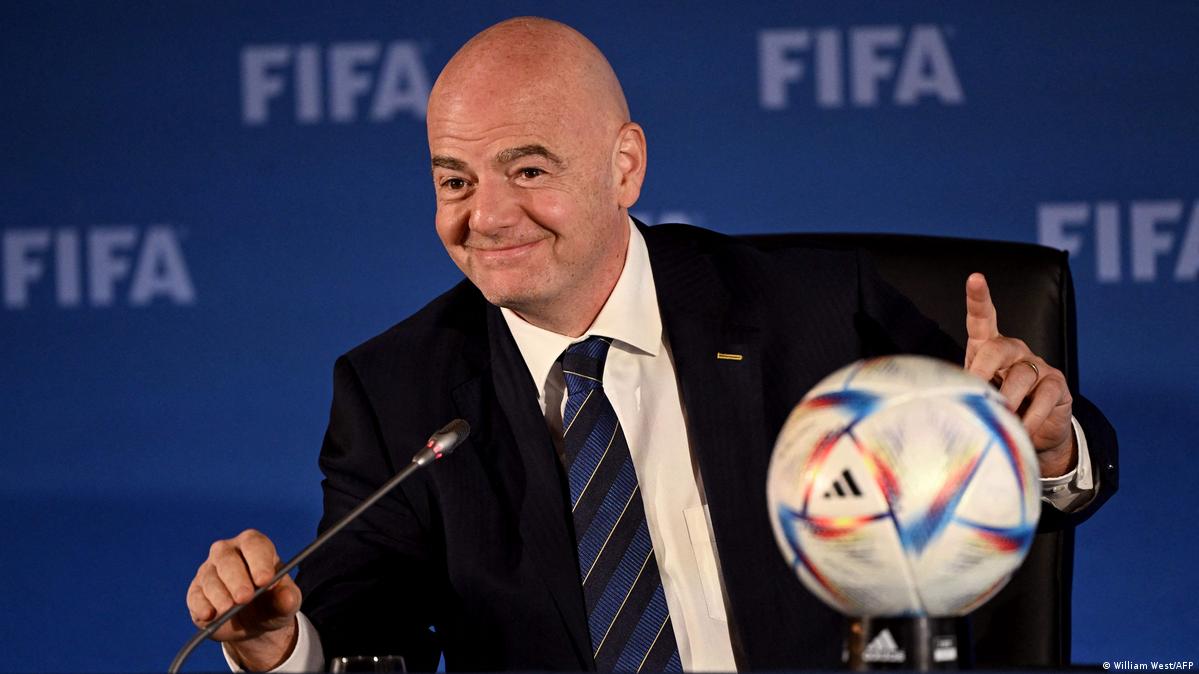
That is where FIFA and Gianni Infantino enters the story.
Or should.
Because FIFA’s own safeguarding framework is explicit: the issue is not only the protection of children under 18. FIFA also recognises young adults over 18 as particularly vulnerable groups in certain football settings. That matters enormously, because the sport’s most convenient defence has long been the same: “But he was already 18.” FIFA’s own language makes clear that turning 18 does not make a young player invulnerable.
This is the contradiction at the heart of the modern game.
On paper, football insists it has learned the vocabulary of care. FIFA talks about safeguarding. It talks about wellbeing. It talks about the best interests of those at risk. At its recent Safeguarding Summit in Zurich, it again stressed the need to strengthen the duty of care owed to people exposed to harm through football activities.
But what does that duty of care actually mean if it does not apply here?
Does it begin when a teenager is moved far from home?
Does it begin when he is separated from his family support system?
Does it begin when he is given a symbolic burden his age cannot yet carry?
Does it begin when his confidence visibly collapses?
Does it begin when the national-team pathway disappears and the player starts to unravel in public?
Or does “duty of care” remain little more than a phrase for conferences and policy slides, while the market continues to operate according to a very different logic?
Because the real problem in football today is rarely open illegality. The real problem is the neutralisation of moral purpose. The paperwork may be correct. The transfer may be formally valid. The age threshold may have been crossed. Yet the human being at the centre of the deal may still be unprotected.
That is what makes cases like these so unsettling. They expose the distance between regulatory comfort and lived reality.
FIFA’s rules on under-18 international transfers were built around youth protection. FIFA still says so. The system is presented as a safeguard against the premature commodification of young players. But modern football has become highly skilled at respecting the letter of a rule while hollowing out its spirit. The market knows exactly where the hard barriers are. It also knows how much can be done just beyond them.
That is why the years immediately after 18 matter so much. They are football’s favourite grey zone: old enough to move, still young enough to break.
And when a player does begin to break, football reaches instinctively for its most useful word: adaptation.
He did not adapt.
He was not ready.
He did not meet expectations.
This language is neat, professional and deeply self-serving. It converts structural pressure into individual weakness. It allows clubs, intermediaries and governing bodies to keep their own responsibilities at a safe distance. The player becomes the problem. The system becomes the backdrop.
But sometimes the system is the story.
Keny Arroyo’s disappearance from Ecuador’s current match-day frame matters because visibility matters. For a young player, the national team is not just a sporting stage; it can also be a place of recognition, continuity and restoration. To lose that foothold, after already moving through instability at club level, suggests more than a temporary dip.
Elan Ricardo’s profile matters because on-pitch loss of control is not always only tactical. Limited minutes, a red card, then serious physical disruption: for a young player, that can be the outward expression of a deeper instability. Again, I am not claiming more than the evidence shows. But the evidence already shows enough to warrant concern.
So where is FIFA in all this?
In theory, at the centre.
In documents, at the centre.
In safeguarding language, at the centre.
In public moral posture, at the centre.
But when football’s youngest professionals begin to show the signs of strain, FIFA too often appears more comfortable with procedure than with reality.
And that is the real question now. Not whether FIFA has a safeguarding discourse. It does. Not whether it can define duty of care. It can. The question is whether those concepts have any force at the precise moment they become inconvenient.
Do they protect the vulnerable player?
Or do they merely protect the reputation of the system?
Football has become very good at calculating the value of young talent. It is still remarkably poor at recognising the cost of exposing that talent too early, too quickly, and with too little protection.
If FIFA is serious about safeguarding, then cases like these cannot be treated as unfortunate background noise in the normal functioning of the market. They must be read for what they may be: signs that the game’s protective language is lagging behind its commercial appetite.
And if that gap remains unaddressed, then the problem is no longer simply where FIFA stands in the game.
It is whether FIFA, while speaking in the language of protection, has allowed itself to become part of the machinery that makes such fragility easier to ignore.
Edward Hawley / NationalTurk
Serdal Adalı: The money for Muçi and Al Musrati transfers goes to the funds, not to Legia and Braga!