

Football’s lost boys: The hidden cost of moving too young, too fast
The stories of Keny Arroyo and Elan Ricardo do not immediately announce themselves as tragedies.
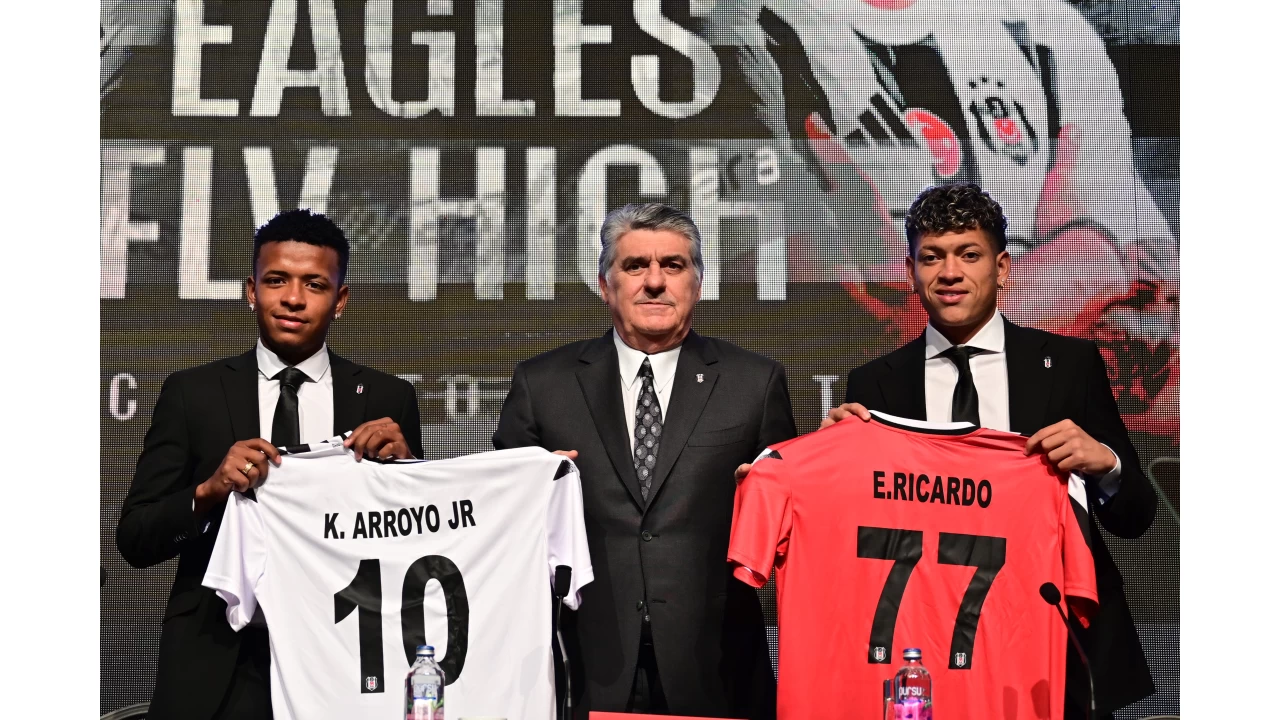
Keny Arroyo and Elan Ricardo arrived bearing promise, projection and price tags.
What followed raises an older, darker question about the modern game: when football speaks of opportunity, who exactly is it protecting?
There is a particular way modern football likes to tell these stories.
A teenager is spotted early, spoken of in tones of excitement, moved across borders, presented to cameras, wrapped in the language of promise. The photographs are always clean. A shirt held up. A handshake. A smile that may mean joy, disbelief or simply obedience to the choreography of the moment. The club speaks of the future. The market speaks of potential. Everyone agrees a new chapter has begun.
What is less often examined is what that chapter costs.
The stories of Keny Arroyo and Elan Ricardo do not immediately announce themselves as tragedies. On the surface, they resemble the kind of transfer narratives football now treats as routine: young talent, international mobility, the promise of development, the lure of Europe, the strategic confidence of clubs willing to act early. It is only when the sequence is slowed down when the human being is allowed back into the frame that the unsettling contours become clearer.
Because these are not just stories about footballers. They are stories about age, fragility, distance, pressure and the strange coldness of a system that can move very quickly while pretending that movement itself is a form of care.
The speed of the market
Football has always traded in hope. But in recent years, hope has become faster, more transactional, more finely priced. Young players are no longer merely recruited; they are positioned. They are mapped onto future scenarios, resale curves, branding possibilities and strategic pathways. Their bodies remain human, but their careers are often discussed like assets in motion.
This is not new enough to shock anyone inside the game. That may be the problem.
The question is not whether talented young players should move, travel or pursue opportunity. Of course they should. Football has long offered life-changing mobility to those gifted enough to seize it. The question is what happens when that mobility outpaces emotional readiness, social support and ordinary human development. What happens when a player is old enough to sign, but not old enough to bear everything that comes with being treated as a symbol, an investment or a shortcut to future gain?
The game does not ask this often enough, perhaps because the answer is inconvenient.
The burden of symbolism
There are gestures in football that seem minor until they are placed on the shoulders of the very young. A number on a back, for example, is never just a number. Some shirts come with history attached to them, with memory, fantasy and expectation. To give such a symbol to a teenager is not only to offer trust; it is also to assign weight.
Publicly, these gestures are celebrated as confidence. Internally, they can feel very different.
The modern game is full of young players who are marketed before they are settled, elevated before they are protected, mythologised before they are understood. Once that process begins, it becomes very difficult for the player to fail in ordinary ways. A poor run of form no longer belongs merely to football. It becomes a disappointment against a story that others have already written for him.
And stories, once imposed, are heavy things.
Distance cannot be managed like logistics
Football clubs are good at logistics. They can arrange flights, housing, drivers, schedules, translators, nutrition plans and media obligations with military efficiency. But logistics and care are not the same thing.
A teenager far from home is not just an athlete in a new workplace. He is also a young person navigating absence: absence of familiar language, family rhythms, trusted voices, old friendships, ordinary routines, private comfort. This is true even for players who appear composed in public. Especially for them, sometimes.
The game prefers the term “adaptation”. It sounds professional, manageable, temporary. But adaptation can be a misleadingly tidy word for what is sometimes a much more painful reality: dislocation.
To say a player is struggling to adapt may be true. It may also conceal the deeper fact that he has been asked to become emotionally self-sufficient at an age when even gifted, ambitious young adults are rarely equipped to do so. A club can provide accommodation. It cannot manufacture belonging.
The quieter file
Arroyo may attract more attention, more noise, more projection. But cases like Elan Ricardo matter just as much, perhaps more, because the quieter files often reveal the truer logic of the system.
Football does not only expose its values in the stars it promotes. It reveals them also in the young men who move with less fanfare, less protection and less public scrutiny. These players may never become central to the marketing story, but they still carry the risks embedded in it. They too are expected to be flexible, grateful, resilient and immediately legible to a system that rarely slows down for anybody.
The silence around such cases should not be mistaken for harmlessness. Often it simply means fewer witnesses.
When profit speaks louder than care
There is something uniquely chilling about hearing very young players discussed primarily in the language of returns. Football, being football, will always speak that language to some extent. Clubs buy, sell, plan, hedge and report. But when the economic frame becomes dominant especially after a period marked by strain, instability or evident vulnerability it reveals the moral asymmetry at the heart of the business.
The balance sheet may record success. The player may have lived something else entirely.
This is not sentimentality. It is a basic recognition that a transfer can make financial sense while still leaving human damage behind. Modern football has become remarkably sophisticated at calculating value, but it remains conspicuously underdeveloped in accounting for emotional cost. Confidence lost. Stability interrupted. Trust eroded. Joy displaced by performance anxiety. None of this appears in official summaries.
And yet such losses may be the most consequential of all.
The invisible hands
No transfer story exists in isolation now. Around almost every move there are intermediaries, relationships, networks, incentives, strategic alignments, whispered assurances and competing interests. The player remains the public face of the deal, but seldom its sole author. That, too, has become normal enough to pass without outrage.
But normality is not innocence.
The uncomfortable question hanging over cases like these is not simply whether the move was legal, advantageous or technically defensible. It is whether the young player remained the true centre of the process, or whether he became secondary to a wider set of calculations made in his name.
The game has learned to call almost every motion progress. Sometimes it is. Sometimes it is merely circulation.
What football refuses to see
What makes stories like those of Keny Arroyo and Elan Ricardo so troubling is not that they are exceptional. It is that they are beginning to feel familiar. A teenager identified. A future imagined. A move accelerated. A burden imposed. A struggle reframed as adaptation. A reshuffle. A silence.
The pattern is not always dramatic enough to qualify as scandal. Often it is simply sad in ways the sport has trained itself not to notice.
That may be the deepest indictment of all.
Because football does not only risk failing young players when rules are broken or procedures abused. It can fail them more quietly, more respectably, by insisting that what is happening to them is normal. By treating precarity as ambition. By mistaking market velocity for developmental wisdom. By assuming that because a young man can move, he is ready to carry everything movement demands.
Perhaps Arroyo and Ricardo will recover fully, flourish elsewhere, and render all early judgments provisional. One hopes they do. But even if they do, the underlying question remains.
Not whether football can discover young talent.
It plainly can.
But whether it still knows how to protect youth once it has found it.
And in the modern game, that may be the more revealing test.
Edward Hawley / NationalTurk
Serdal Adalı: The money for Muçi and Al Musrati transfers goes to the funds, not to Legia and Braga!