

Nicotine may rewire the brain beyond smoking: Study finds stronger drive to work for food
A study published in Biological Psychiatry found that long-term nicotine exposure can alter brain circuits linked to motivation. In experiments on mice, nicotine-exposed animals worked much harder to obtain food rewards.
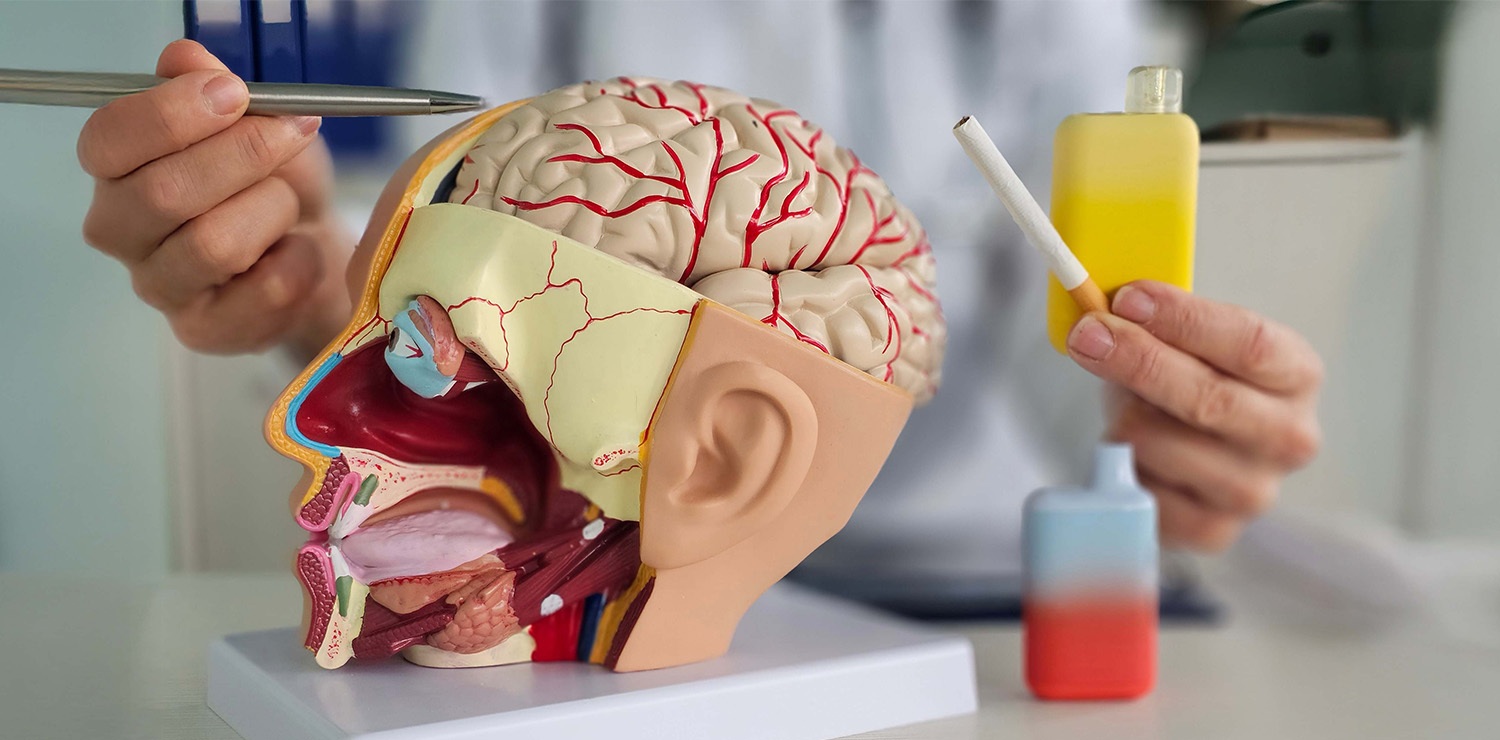
Nicotine addiction may affect more than the urge to smoke, according to new research. The study found that prolonged nicotine exposure changes how the brain responds to natural rewards, increasing the motivation to seek food rather than simply increasing pleasure from eating.
The drive to get food increased
In the study, male mice were given water containing gradually increasing doses of nicotine for six weeks. Afterward, the animals were trained to press a lever to receive tasty food pellets. The nicotine-exposed mice pressed the lever far more often and worked harder to obtain the reward than the control group.
But when the same food was freely available, the nicotine-exposed mice ate less. This suggested that nicotine increased the urge to pursue the reward, not the enjoyment of eating it.
New hope for smokers trying to quit: Single dose of psilocybin outperforms nicotine patch in study
Brain’s control system weakened
The research found that nicotine reduced the response of dopamine-producing brain cells to natural acetylcholine signals. These signals normally help regulate motivation. When they were weakened by prolonged nicotine exposure, dopamine activity became overactive, creating a state of excessive reward-seeking.
Behavior returned to normal in the experiment
When researchers artificially restored activity in the weakened brain pathway, the mice’s excessive food-seeking behavior returned to normal. The findings suggest that nicotine can create both functional and structural changes in motivation circuits.
May explain other reward-seeking behaviors
The study may help explain why people who smoke can experience stronger reward-driven behaviors beyond nicotine use, including overeating or gambling-like patterns. Researchers noted that the experiments were conducted only on male mice, so further studies are needed to see whether the same effects occur in females.