
Khamenei Dead | 40 Days of National Mourning Declared in Iran
Iranian state television announced that Supreme Leader Ayatollah Ali Khamenei was killed in a US-Israeli attack. Tehran declared 40 days of national mourning and a seven-day public holiday as protests and memorial gatherings spread across the country.
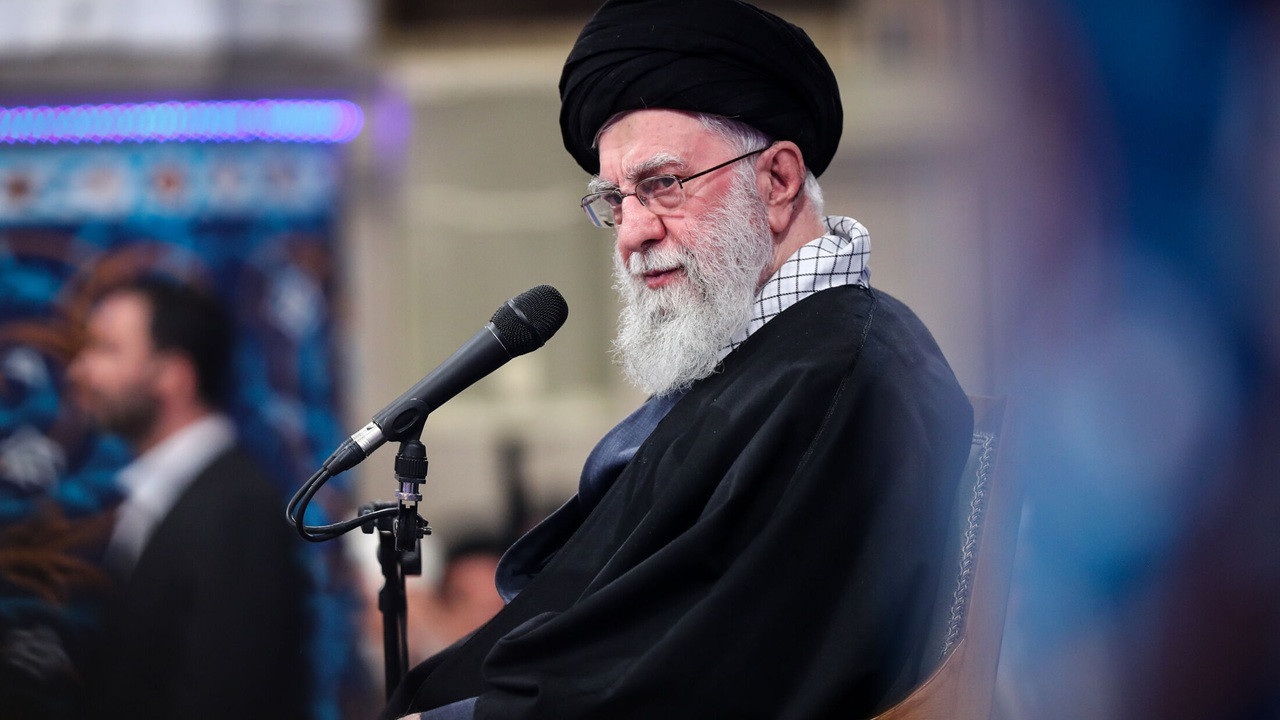
A major turning point has unfolded in the Middle East. Iranian state television confirmed that Ayatollah Ali Khamenei, the Supreme Leader of the Islamic Republic of Iran, was killed in a joint US-Israeli strike. In its announcement, state media said, “The leader of the Islamic Revolution of Iran has attained martyrdom.”
Following the confirmation, the Iranian government declared 40 days of national mourning and seven days of official public holiday nationwide.
State media confirmation
Iranian state television reported that Khamenei was killed in the US-Israeli attack carried out the previous day. The same announcement stated, “The leader of the Islamic Revolution of Iran has attained martyrdom.”
Iran’s official news agency IRNA also reported that senior officials were killed in the strikes. According to IRNA, Ali Shamkhani, Secretary of Iran’s Supreme National Security Council and adviser to Khamenei, as well as Major General Mohammad Pakpour, Commander of the Islamic Revolutionary Guard Corps, lost their lives in the attack.
40 days of mourning, 7-day public holiday
After Khamenei’s death was announced, the Iranian government declared a 40-day national mourning period. In addition, a seven-day official public holiday was proclaimed.
As part of the mourning decision, the Iranian Consulate General in Istanbul lowered its flag to half-staff.
Nationwide demonstrations
Following the announcement of Khamenei’s death, demonstrations were held in many cities across Iran.
According to Iranian media, people took to the streets carrying Iranian flags. In Tehran, large crowds gathered at Enghelab Square, holding Iranian flags and posters of Khamenei while chanting anti-US and anti-Israel slogans.
In Qom, hundreds gathered at the Shrine of Hazrat Masumeh, condemning the United States and Israel.
In Mashhad, a black flag was raised over the dome of the Imam Reza Shrine. Visitors to the site were seen in tears as mourning ceremonies and condemnation rallies were organized in multiple cities.
Trump: “Khamenei is dead”
US President Donald Trump claimed on his Truth Social platform that Khamenei had been killed.
Trump wrote: “Khamenei, one of the most evil people in History, is dead.” He added that the Iranian leader “was unable to avoid our Intelligence and Highly Sophisticated Tracking Systems.”
Trump also stated, “This is the single greatest chance for the Iranian people to take back their Country.”
Netanyahu’s remarks
Israeli Prime Minister Benjamin Netanyahu had earlier said, “The plan to destroy Israel no longer exists, and there is a high likelihood that the tyrant Khamenei does not either.”
Israeli sources reported that “commanders in the Revolutionary Guard and senior officials in the nuclear programme” were eliminated in the strikes.
International reactions
United Nations Secretary-General Antonio Guterres told an emergency meeting of the Security Council that military action risks triggering uncontrollable consequences and called for immediate de-escalation.
Iran’s UN Ambassador Amir Saeid Iravani described the strikes as “a war crime and a crime against humanity.”
US Ambassador to the UN Mike Waltz insisted that the military action was lawful, stating, “Iran cannot have a nuclear weapon.”
Representatives of China and Russia condemned the strikes and demanded that hostilities cease immediately.
Who was Khamenei?
Ayatollah Ali Khamenei was born on April 19, 1939, in Mashhad. He studied Islamic theology in Mashhad and Qom.
In 1962, he joined Ayatollah Khomeini’s movement against the Shah and was repeatedly arrested and exiled.
After the 1979 revolution, he held several key positions, including Deputy Defense Minister and Tehran Friday Prayer leader.
He survived a bombing attack in 1981 and later that year was elected as Iran’s third President. He was re-elected in 1985.
Following Ayatollah Khomeini’s death in 1989, the Assembly of Experts selected him as Supreme Leader, the highest authority in Iran.
As Supreme Leader, Khamenei held constitutional powers above all branches of government and served as Commander-in-Chief of the Armed Forces, with the final say on domestic and foreign policy.